backpacking advice cwbiancavoyage – A Complete Guide to Smart, Safe, and Meaningful Backpacking
Backpacking is more than a style of travel; it is a mindset built on curiosity, adaptability, and respect for the world around you. For many travelers, the idea of carrying everything on their back and stepping into the unknown represents freedom in its purest form. Yet freedom becomes truly enjoyable only when it is supported by preparation and understanding. This is where practical insight, patience, and shared experience come together, shaping journeys that are memorable for the right reasons. Throughout this guide, you will encounter perspectives inspired by backpacking advice cwbiancavoyage, blended into a broader framework that encourages responsible, enriching, and sustainable exploration.
Understanding the Backpacking Mindset
Before discussing gear, routes, or budgets, it is important to understand the mindset that defines successful backpacking. Unlike conventional tourism, backpacking emphasizes flexibility over rigid plans. It asks travelers to accept uncertainty and to see challenges as part of the adventure rather than obstacles. This approach allows you to adapt to changing circumstances, whether that means altering an itinerary due to weather or embracing an unexpected cultural experience.
At its core, backpacking is about intentional simplicity. Carrying fewer possessions encourages you to value experiences over objects. Many seasoned travelers note that this simplicity sharpens awareness and deepens appreciation for everyday moments. Drawing from backpacking advice cwbiancavoyage, the key is not to abandon comfort entirely but to redefine it in terms of meaningful engagement rather than luxury.
Research and Planning Without Overplanning
Preparation is essential, but excessive planning can limit spontaneity. The challenge lies in finding balance. Researching destinations, climate, visa requirements, and cultural norms provides a foundation of confidence. However, leaving room for discovery ensures that the journey remains dynamic.
When researching, focus on understanding patterns rather than fixed schedules. Learn about transportation options, average costs, and safety considerations. This knowledge allows you to make informed decisions on the road. Many travelers influenced by backpacking advice cwbiancavoyage recommend creating a loose framework rather than a detailed day-by-day plan, enabling flexibility without sacrificing preparedness.
Packing with Purpose
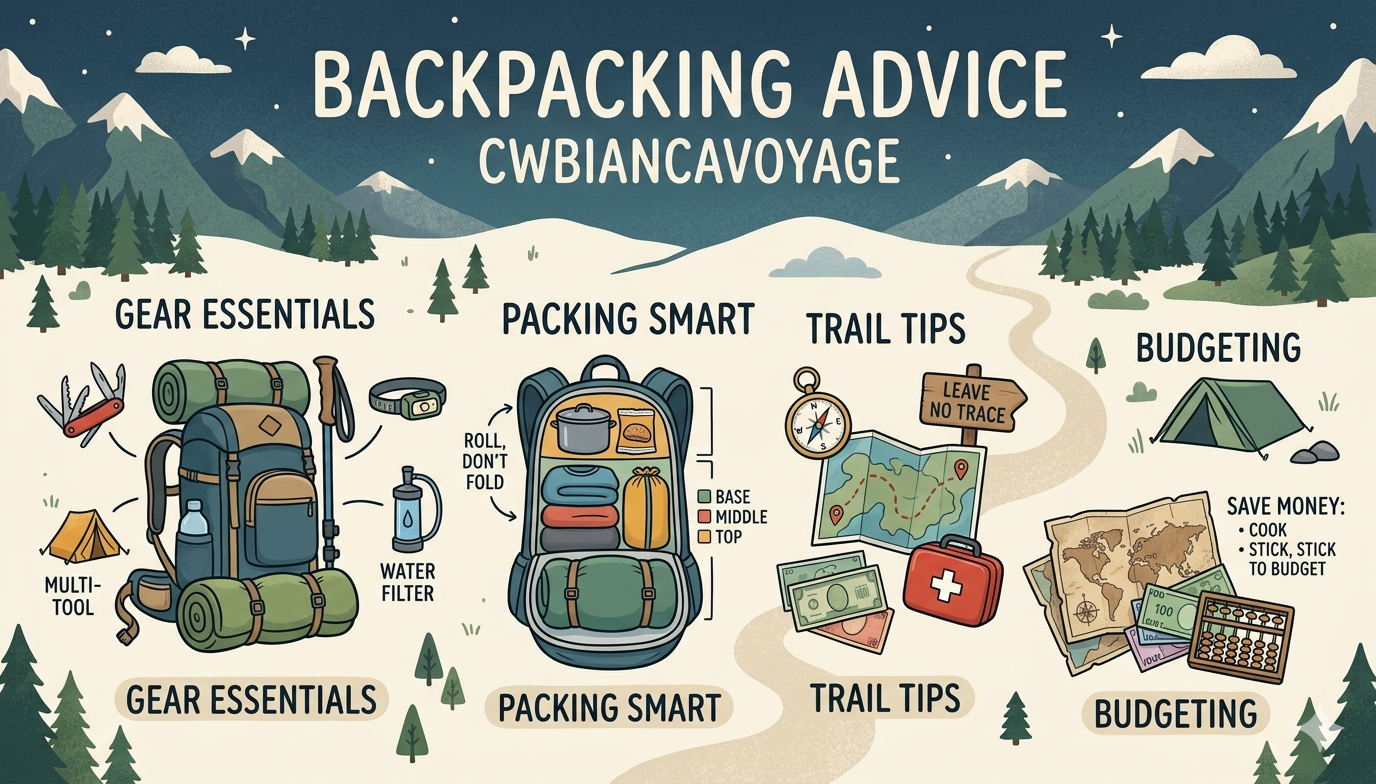
Packing is one of the most critical skills for any backpacker. Every item you carry should earn its place by serving multiple purposes or addressing essential needs. Overpacking leads to fatigue, while underpacking can compromise safety and comfort.
Start by choosing a backpack that fits your body well and suits the length of your trip. Clothing should be versatile, lightweight, and suitable for layering. Prioritize quality over quantity, especially for footwear and weather protection. A carefully curated packing list, shaped by backpacking advice cwbiancavoyage, ensures that your load remains manageable while still meeting practical requirements.
Equally important is mental packing. Prepare yourself for moments of discomfort or uncertainty. Accepting these moments as part of the journey reduces stress and allows you to respond calmly when plans change.

Budgeting for Long-Term Travel
One of the most appealing aspects of backpacking is its affordability compared to traditional travel. However, effective budgeting requires honesty and discipline. Begin by identifying your travel style. Some backpackers prefer strict budgeting, while others allocate more resources to occasional comforts or unique experiences. easy traveling cwbiancavoyage
Track expenses early in the trip to understand spending patterns. Small daily costs can accumulate quickly if left unchecked. Incorporating principles found in backpacking advice cwbiancavoyage, it is wise to maintain an emergency fund separate from daily expenses. This buffer provides peace of mind and prevents minor issues from becoming trip-ending crises.
Cultural Awareness and Respect
Backpacking often brings travelers into close contact with local communities. Cultural awareness is therefore not optional; it is a responsibility. Learning basic phrases, understanding social norms, and observing local customs demonstrate respect and openness.
Avoid viewing cultures as attractions. Instead, approach interactions with humility and curiosity. Listening more than speaking often leads to richer exchanges and deeper understanding. According to backpacking advice cwbiancavoyage, genuine respect fosters trust, which can open doors to experiences unavailable through guidebooks alone.
Health, Safety, and Well-Being
Staying healthy on the road requires proactive habits. This includes maintaining hygiene, staying hydrated, and listening to your body. Travel fatigue can accumulate, especially during long journeys, making rest an essential component of any itinerary.
Safety awareness involves more than avoiding obvious risks. It includes understanding local transportation systems, securing personal belongings, and being mindful of surroundings. Travelers who follow backpacking advice cwbiancavoyage often emphasize situational awareness as a skill developed over time, sharpened through observation and experience rather than fear.
Navigating Transportation and Movement
Transportation choices significantly shape the backpacking experience. Public transit, walking, and shared rides often provide opportunities to engage with local life. While these options may require patience, they also offer authenticity and affordability.
Learning to navigate unfamiliar systems builds confidence and independence. Mistakes are inevitable, but they often lead to memorable stories and unexpected discoveries. Inspired by backpacking advice cwbiancavoyage, seasoned travelers recommend viewing navigation challenges as learning opportunities rather than setbacks. etisalat monthly unlimited data package 50 aed, how much does supply chain management software cost, brat generator, etsjavaapp release date
Accommodation Choices and Community
Backpackers have access to a wide range of accommodation options, from hostels and guesthouses to homestays and shared spaces. Each option offers different benefits, from affordability to cultural immersion.
Choosing accommodation is not only about price but also about atmosphere and values. Spaces that encourage social interaction can lead to friendships and shared experiences. According to backpacking advice cwbiancavoyage, these connections often become highlights of the journey, providing support and companionship far from home.
Sustainable and Responsible Travel
Modern backpacking carries an ethical dimension. Travelers have a responsibility to minimize negative impacts on environments and communities. Simple actions, such as reducing waste, supporting local businesses, and respecting natural spaces, contribute to sustainable travel.
Responsible backpacking also involves self-awareness. Consider how your presence affects the places you visit. Adopting principles aligned with backpacking advice cwbiancavoyage encourages travelers to leave destinations better than they found them, preserving opportunities for future generations.
Adapting to Different Regions and Contexts
Every region presents unique challenges and rewards. Climate, infrastructure, and cultural expectations vary widely, requiring adaptability. What works in one place may not be suitable in another.
For example, backpacking in the United States often involves long distances and diverse climates, demanding careful logistical planning. In contrast, other regions may emphasize compact travel and dense cultural experiences. Regardless of location, the adaptability promoted by backpacking advice cwbiancavoyage remains universally relevant.
Reflection, Growth, and Returning Home
Backpacking is as much an internal journey as an external one. Time spent navigating unfamiliar environments encourages self-reflection and personal growth. Challenges test resilience, while successes build confidence.
Returning home can feel surprisingly complex. Integrating lessons learned on the road into everyday life requires intention. Many travelers find that the perspectives gained through backpacking advice cwbiancavoyage continue to influence their decisions long after the journey ends, shaping values related to simplicity, empathy, and curiosity.
Conclusion
Backpacking is ultimately a journey of balance—between planning and spontaneity, comfort and challenge, backpacking advice cwbiancavoyage, independence and connection. When approached with awareness and respect, it allows travelers to move beyond surface-level experiences and develop a deeper understanding of both the world and themselves. The lessons learned on the road—adaptability, patience, cultural sensitivity, and simplicity—often extend far beyond travel itself, influencing everyday life in meaningful ways. By staying open to change, valuing people and places over rigid plans, and traveling responsibly, backpacking becomes more than an adventure; it becomes a lifelong source of growth, perspective, and inspiration.