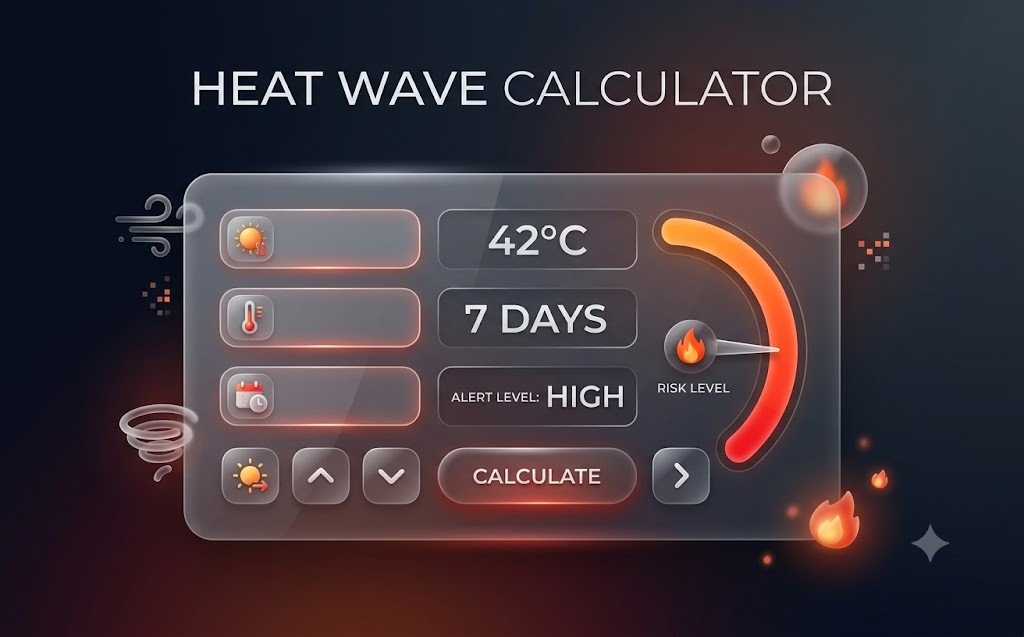
Stay Safe with Heat Wave Calculator for Hot Days
Heat waves are becoming more common across the world, making it essential to understand how extreme temperatures affect health and daily activities. A Heat Wave Calculator helps people estimate the intensity of hot weather by combining factors such as air temperature, humidity, and sometimes wind speed. Instead of relying only on the temperature shown in weather forecasts, this tool provides a clearer picture of how hot it actually feels. Whether you are planning outdoor work, exercise, travel, or family activities, using a Heat Wave Calculator can help you avoid heat-related illnesses and make informed decisions.
What Is a Heat Wave Calculator?
A Heat Wave Calculator is an online or digital tool that measures the severity of hot weather conditions. It typically uses weather information such as temperature and humidity to estimate how dangerous the environment may become. Some advanced calculators also consider sunlight, wind speed, and local climate conditions.
Unlike a simple thermometer reading, the calculator evaluates the combined effect of environmental factors on the human body. This makes it a practical resource for workers, athletes, travelers, and anyone spending time outdoors during summer. The results often indicate whether conditions are safe, cautionary, or hazardous.
How Does a Heat Wave Calculator Work?
The calculator gathers weather data from reliable sources or allows users to enter values manually. Once the temperature and humidity are provided, the system applies scientific formulas to estimate the apparent temperature, often called the “feels like” temperature.
Higher humidity reduces the body’s ability to cool itself through sweating. As a result, a temperature of 35°C with high humidity may feel much hotter than the same temperature in dry conditions. The Heat Wave Calculator processes these values instantly and provides an easy-to-understand result with safety recommendations.
Why Heat Waves Are Dangerous
Heat waves can seriously affect human health, especially when they last several days. Prolonged exposure to extreme heat increases the risk of dehydration, heat exhaustion, and heat stroke. Older adults, young children, pregnant women, and people with chronic illnesses face even greater risks.
Hot weather also places additional stress on the heart and lungs. Even healthy individuals may experience fatigue, dizziness, headaches, and muscle cramps if they remain outdoors too long. Understanding the severity of a heat wave allows people to take preventive measures before symptoms develop.
Key Factors Used in the Calculation
Several environmental conditions influence the results of a Heat Wave Calculator. Air temperature is the primary factor because it determines the amount of heat in the environment. Humidity is equally important because it affects how efficiently sweat evaporates from the skin.
Some calculators include wind speed, cloud cover, solar radiation, and local elevation. These variables improve the accuracy of the final result by reflecting real-world weather conditions. Combining these measurements provides a more realistic estimate of the stress heat places on the human body.
Benefits of Using a Heat Wave Calculator
Using a Heat Wave Calculator offers several practical advantages for individuals and organizations. It helps people plan outdoor activities more safely by identifying the hottest periods of the day. Construction workers, farmers, athletes, and event organizers can schedule tasks during cooler hours.
Families can also use the calculator before planning picnics, sports events, or vacations. Schools may adjust outdoor activities based on calculated heat risks. By providing early awareness, the tool reduces the chances of heat-related emergencies and improves overall safety.
Understanding Heat Risk Levels
Most Heat Wave Calculators categorize results into different warning levels. Mild conditions usually indicate normal outdoor activities can continue with regular hydration. Moderate levels suggest drinking more water and limiting prolonged exposure to the sun.
High-risk categories often recommend avoiding strenuous outdoor work during peak afternoon hours. Extreme warning levels indicate a significant danger of heat stroke and advise remaining indoors whenever possible. These categories help users quickly understand the seriousness of current weather conditions.
Who Should Use a Heat Wave Calculator?
Almost everyone can benefit from using this tool, especially during the summer months. Outdoor workers rely on it to protect themselves from excessive heat while completing physically demanding tasks. Athletes use it to determine whether training sessions should be shortened or postponed.
Parents can check conditions before allowing children to play outside. Elderly individuals and caregivers can monitor daily heat risks to prevent medical emergencies. Travelers visiting warm destinations may also use the calculator to prepare for unfamiliar weather conditions.
Heat Wave Calculator for Outdoor Workers
Construction crews, road maintenance teams, delivery drivers, and agricultural workers often spend long hours under direct sunlight. These occupations expose workers to extreme temperatures that can quickly lead to dehydration and heat exhaustion.
Employers can use a Heat Wave Calculator to establish safe work schedules, increase rest breaks, and ensure workers stay hydrated. Many workplace safety programs now recommend monitoring heat conditions regularly to reduce occupational health risks and maintain productivity.
Importance for Athletes and Fitness Enthusiasts
Exercise naturally raises body temperature. During a heat wave, the body must work even harder to regulate internal temperature, increasing the risk of overheating. A Heat Wave Calculator helps athletes determine whether outdoor workouts should be modified.
Coaches and trainers often use these calculations before scheduling practice sessions or competitions. If conditions become dangerous, activities can be moved indoors or shifted to early morning or evening hours when temperatures are lower.
Heat Wave Safety Tips
While a Heat Wave Calculator provides valuable information, users should also follow basic heat safety practices. Drink plenty of water throughout the day, even if you do not feel thirsty. Wear lightweight, breathable clothing and choose light-colored fabrics that reflect sunlight.
Stay indoors during the hottest part of the afternoon whenever possible. Use sunscreen, wear a wide-brimmed hat, and take frequent breaks in shaded or air-conditioned areas. Never leave children or pets inside parked vehicles, even for a few minutes.
Common Signs of Heat-Related Illness
Recognizing early symptoms can prevent serious medical emergencies. Heat exhaustion often begins with heavy sweating, weakness, nausea, dizziness, and muscle cramps. If untreated, these symptoms may progress into heat stroke.
Heat stroke is a life-threatening condition characterized by confusion, high body temperature, rapid heartbeat, and loss of consciousness. Immediate medical attention is essential. Using a Heat Wave Calculator before outdoor activities can significantly reduce the likelihood of reaching this dangerous stage.
Heat Wave Calculator and Climate Change
Climate change has increased the frequency, duration, and intensity of heat waves in many regions around the world. Rising global temperatures make heat monitoring tools increasingly important for both individuals and governments.
Communities now rely on weather forecasting systems combined with Heat Wave Calculators to issue public warnings and prepare emergency response plans. As climate conditions continue changing, these calculators will play an even greater role in protecting public health.
Choosing the Best Heat Wave Calculator
Many weather websites and mobile applications offer Heat Wave Calculators with different features. Look for calculators that use updated weather data, provide clear safety recommendations, and explain their calculations in simple language.
Some advanced tools display hourly forecasts, personalized alerts, and location-based predictions. Selecting a reliable calculator ensures accurate information that helps users make better decisions during periods of extreme heat.
Conclusion
A Heat Wave Calculator is a valuable tool that helps people understand the true impact of hot weather beyond simple temperature readings. By combining factors such as humidity and temperature, it provides realistic estimates of heat stress and offers practical guidance for staying safe. Whether you are working outdoors, exercising, traveling, or caring for family members, checking a Heat Wave Calculator before heading outside can reduce health risks and improve preparedness. As heat waves become more frequent, using this simple tool alongside proper hydration, protective clothing, and smart scheduling can help everyone stay healthier and safer throughout the hottest days of the year.