Smart How To Reply To One-Word Texts From Guys Tips
One-word texts can be confusing, especially when they come from someone you’re interested in. Replies like “okay,” “cool,” “sure,” or “fine” may leave you wondering what they really mean. While it’s easy to overthink these short messages, they don’t always indicate boredom or a lack of interest. Some people naturally text in brief responses, while others may simply be busy. Learning how to respond confidently can keep the conversation alive without making you seem desperate. This guide explains practical strategies to handle one-word replies and maintain engaging conversations with ease.
Why Guys Send One-Word Texts
Before deciding how to reply, it’s important to understand that one-word texts don’t always carry a hidden meaning. Some guys prefer short messages because they’re not enthusiastic texters. Others may be occupied with work, school, or personal responsibilities and send quick replies to acknowledge your message.
In some situations, a How To Reply To One-Word Texts From Guys response may suggest that the conversation has slowed down or that they don’t know what to say next. Instead of assuming the worst, consider the overall pattern of your conversations. Looking at the bigger picture helps you respond calmly instead of reacting emotionally.
Stay Calm and Avoid Overthinking
Receiving a brief reply can make anyone question the conversation. However, jumping to conclusions often creates unnecessary stress. A single “yes” or “okay” doesn’t automatically mean someone has lost interest or wants to end the conversation.
Take a moment before replying. Remember that texting lacks tone and facial expressions, making messages easy to misinterpret. Staying relaxed allows you to respond naturally rather than sending multiple follow-up texts that may seem overwhelming.
Match Their Energy Without Playing Games
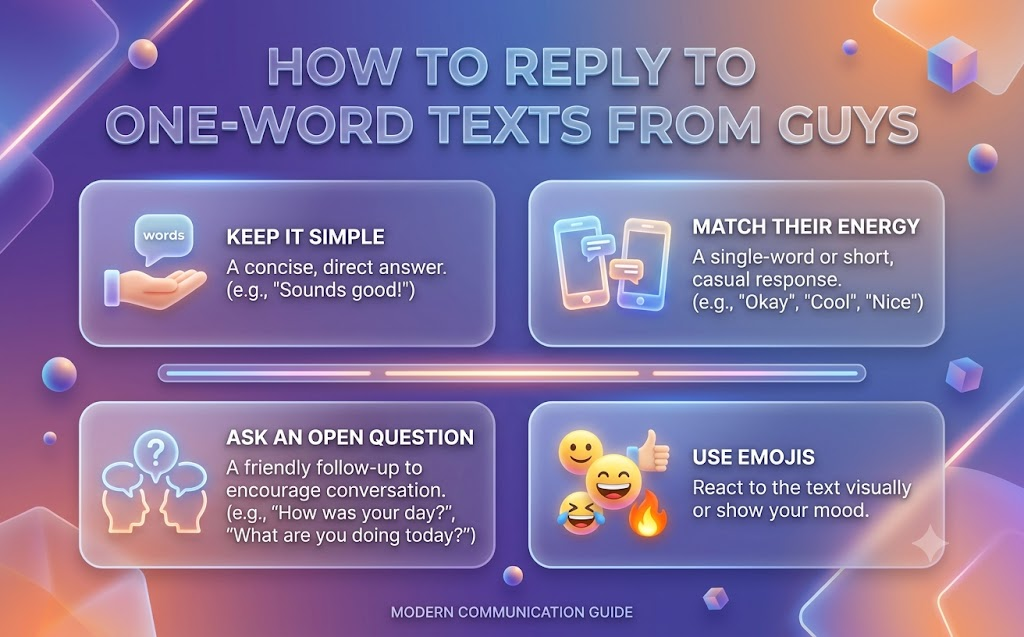
A helpful approach is to mirror the tone of the conversation. If the guy sends a short reply, you don’t always need to respond with a lengthy paragraph. Matching the pace keeps the interaction balanced without appearing overly eager.
This doesn’t mean intentionally acting cold or ignoring messages. Instead, maintain a comfortable communication style that respects both people’s effort. Balanced conversations usually feel more natural and enjoyable for everyone involved.
Ask Open-Ended Questions
One of the easiest ways to move beyond one-word answers is by asking questions that require more than “yes” or “no.” Open-ended questions encourage the other person to share opinions, stories, or experiences instead of giving short replies.
For example, instead of asking, “Did you enjoy your weekend?” ask, “What was the best part of your weekend?” Questions that invite detailed answers naturally create more opportunities for interesting conversations.
Add Humor to Lighten the Mood
Humor can quickly revive a slow conversation. If a guy replies with “fine” or “okay,” you can respond playfully to encourage a more engaging exchange. Light-hearted comments often reduce awkwardness and make texting feel more enjoyable.
Avoid sarcasm that could be misunderstood through text. Friendly jokes, funny observations, or playful teasing usually work better because they create a relaxed atmosphere without sounding rude or confrontational.
Change the Topic if Needed
Sometimes the conversation becomes dull because the topic simply isn’t interesting. If you’re getting repeated one-word replies, consider introducing something fresh. Mention a recent event, ask about hobbies, or share an interesting story from your day.
Changing the subject gives the conversation new energy. It also helps you discover shared interests that naturally encourage longer and more meaningful responses from both sides.
Share Something About Yourself
Conversations shouldn’t feel like interviews. If you’re constantly asking questions, the other person may feel pressured. Instead, volunteer information about yourself before asking another question. This creates a balanced exchange where both people contribute equally.
For example, you might mention a funny experience, a movie you recently watched, or a goal you’re working toward. Personal stories often inspire the other person to open up with their own experiences.
Know When to Give Them Space
Not every text requires an immediate response. If someone consistently replies with one-word messages, they might be busy or simply not in the mood to chat. Giving them space shows confidence and respect for their time.
Avoid sending repeated messages hoping for a better reply. Waiting until they’re available often leads to more meaningful conversations later. Healthy communication includes understanding that everyone has moments when they can’t fully engage.
Recognize Signs of Genuine Interest
It’s helpful to look beyond individual messages and observe overall behavior. Someone who regularly starts conversations, remembers details about your life, and responds consistently is likely interested, even if they occasionally send short texts.
On the other hand, if every conversation feels one-sided and requires constant effort from you, it may be worth reconsidering how much energy you’re investing. Mutual interest usually results in balanced communication over time.
Avoid Common Reply Mistakes
Many people accidentally make conversations worse by responding emotionally to one-word texts. Complaining about short replies or asking why someone is being dry can create unnecessary tension. Instead, focus on keeping the conversation positive and relaxed.
Another common mistake is sending multiple follow-up messages without receiving a reply. Giving the other person time to respond demonstrates patience and confidence, which are often more attractive than appearing anxious.
Examples of Good Replies
Having a few response ideas ready can make texting feel much easier. If he says “okay,” you might reply, “Fair enough. What’s your plan for the rest of the day?” If he says “sure,” you could respond, “Awesome! What are you most looking forward to?”
When he replies with “fine,” try saying, “Glad to hear it. Anything interesting happen today?” These responses invite conversation without sounding demanding or overly serious.
Build Better Conversations Over Time
Strong conversations aren’t built from perfect replies alone. They’re created through genuine curiosity, shared experiences, and mutual effort. Focus on learning about the other person’s interests while also expressing your own personality.
As you continue talking, you’ll naturally discover communication styles that work for both of you. The more comfortable you become, the less you’ll worry about occasional one-word messages because you’ll understand the overall dynamic.
Final Thoughts
Learning how to handle one-word texts is about confidence, patience, and effective communication. Instead of assuming the worst, consider the context, ask engaging questions, and keep the conversation balanced. Not every short message is a negative sign, and many conversations improve with the right approach.
The key is to stay authentic while respecting the other person’s communication style. By avoiding overthinking and focusing on meaningful interactions, you’ll create stronger conversations that feel natural, enjoyable, and rewarding for both of you.